
Inside the LyteSpeed Security Stack: The Layers That Keep Your Rochester Business Safe
Cybersecurity is no longer a single software purchase. Antivirus alone cannot protect your business from a stolen password, a phishing email, an unpatched firewall, an insider mistake, or ransomware that reaches your backups.
Your business needs multiple safeguards working together. That is the purpose of the LyteSpeed Security Stack.
Although the stack is an important part of our complete managed IT services, we treat it as a product in its own right. It is a defined, actively managed security solution designed to protect your users, devices, data, network, and business operations.
For small and medium-sized businesses in Rochester, NY, this approach provides something essential: practical protection without the cost and complexity of building an internal security department.
Why Your Business Needs Layered Security
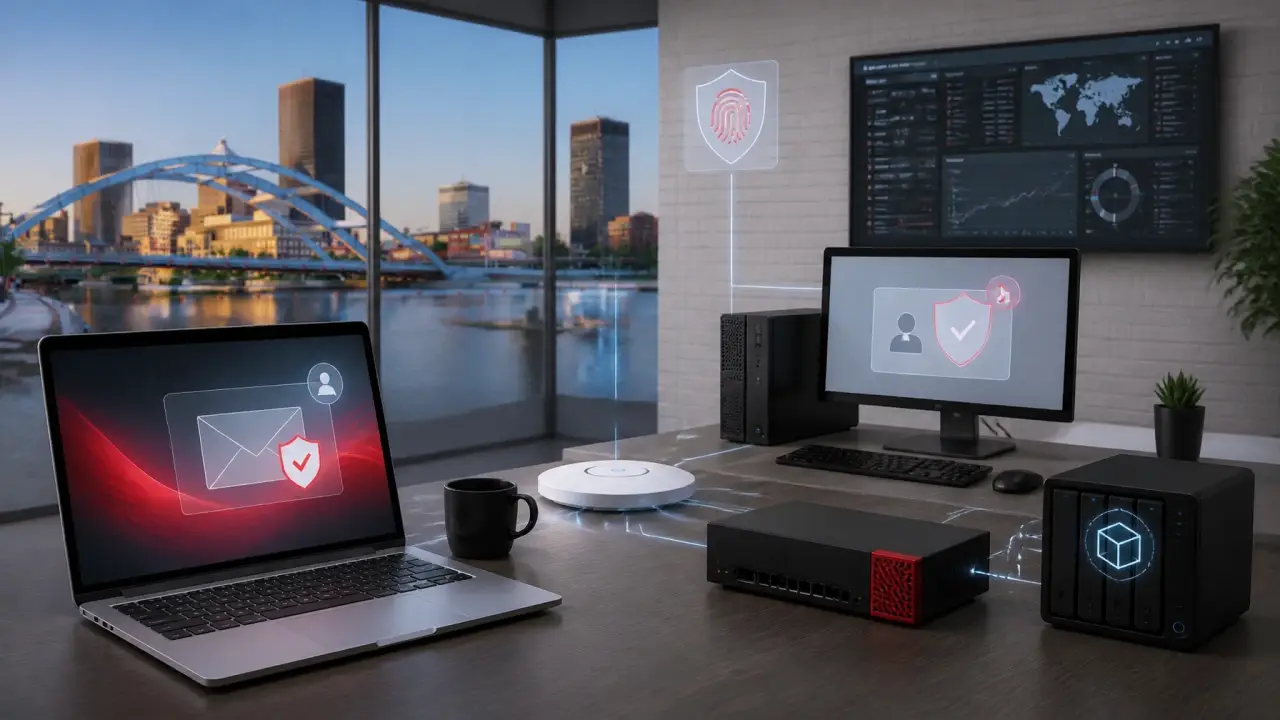
Every business has multiple points of exposure:
- Employees access email from laptops, mobile devices, and home networks.
- Cloud applications store financial records, customer data, and intellectual property.
- Firewalls and wireless networks connect users to critical systems.
- Vendors and remote workers require external access.
- Backups must remain available but protected from ransomware.
- Compliance obligations require documented safeguards and reasonable risk management.
A single security control cannot address all of these risks. If an attacker bypasses one layer, the next layer must detect, block, or limit the damage.
The NIST Cybersecurity Framework 2.0 reflects this broader approach through six functions: Govern, Identify, Protect, Detect, Respond, and Recover. The LyteSpeed Security Stack supports these objectives through technology, enforcement, monitoring, and expert guidance.
Layer One: Endpoint Protection and Detection
Your endpoints include desktops, laptops, servers, and other devices that connect to your business environment. They are frequent targets because attackers know that one compromised device can provide access to an entire organization.
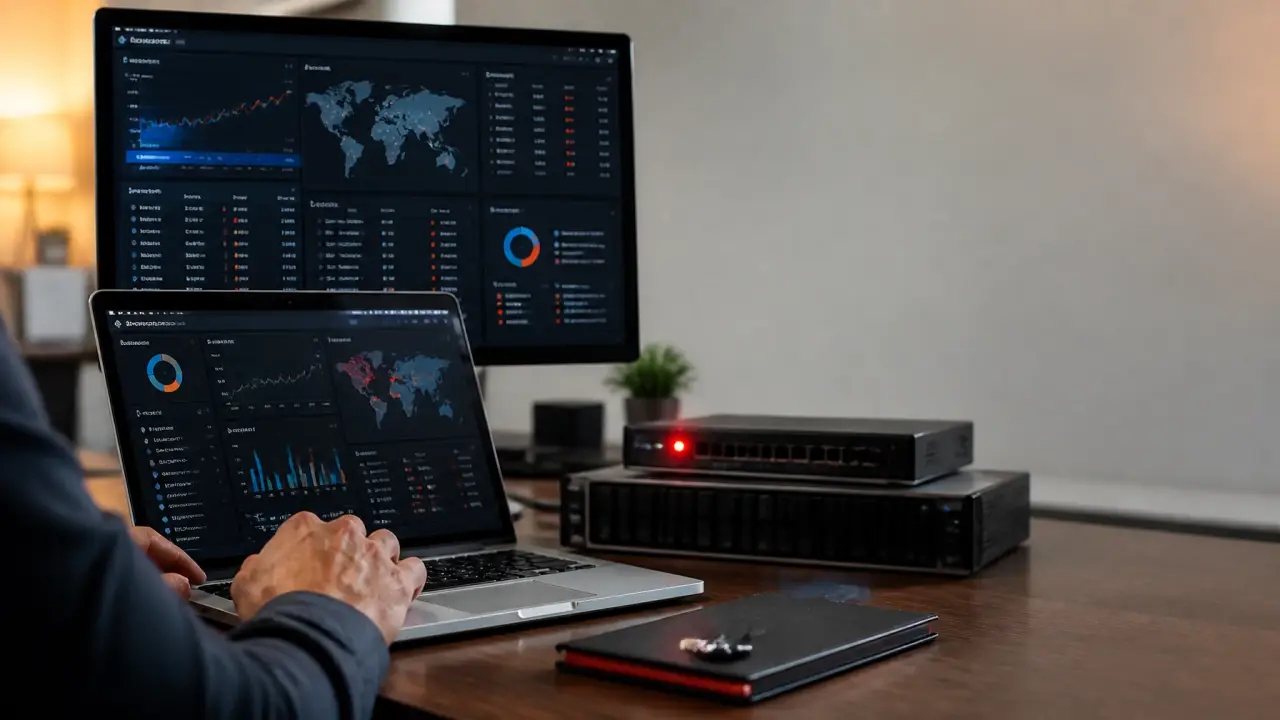
The LyteSpeed Security Stack applies protection and monitoring to managed endpoints. This layer is designed to help:
- Detect malware, ransomware, and suspicious activity.
- Identify unauthorized changes or applications.
- Limit the impact of compromised devices.
- Report security events for investigation.
- Maintain visibility across company-owned and approved devices.
Out-of-the-box endpoint protection may provide basic antivirus functionality, but modern threats often evade simple signature-based detection. A hardened configuration adds behavioral monitoring, policy enforcement, timely updates, and escalation procedures.
The goal is not merely to install software. The goal is to maintain a controlled endpoint environment that supports productivity while reducing avoidable risk.
Layer Two: Network Security and Firewalls
Your network is the pathway connecting employees, systems, cloud services, vendors, and the internet. Without proper controls, that pathway can expose your business to unauthorized access and malicious traffic.
The network security layer includes properly configured firewalls, secure wireless networks, access controls, segmentation where appropriate, and ongoing review of network activity.
A basic firewall installed with default settings is not necessarily a secure firewall. Enhanced protection may require:
- Closing unnecessary ports and services.
- Restricting administrative access.
- Applying current firmware and security updates.
- Separating sensitive systems from general office traffic.
- Securing wireless access points.
- Reviewing remote access methods.
- Monitoring for unusual connection patterns.
This is what businesses should expect from professional network security in Rochester, NY: not just equipment procurement, but design, configuration, maintenance, and accountability.
Layer Three: Email Security and Identity Protection
Email remains one of the most common entry points for business compromise. A convincing message can trick an employee into opening a malicious attachment, sending confidential information, or approving an unauthorized payment.
Email security focuses on reducing phishing, spoofing, malicious links, and account takeover. It may include filtering, alerting, auditing, retention controls, and review of suspicious activity within your Microsoft 365 environment.
Identity protection is equally important. A strong password is no longer enough because attackers can obtain passwords through phishing, credential reuse, data breaches, or malware.
Multi-factor authentication (MFA) requires more than one form of verification, such as a password combined with an authenticator app or security key. If an attacker obtains a password, MFA can prevent that password from being used by itself.
The LyteSpeed approach emphasizes enforcement rather than optional settings. Where appropriate, security policies can require:
- MFA for email, cloud applications, and remote access.
- Strong password complexity.
- Restrictions on risky sign-in activity.
- Administrative account protections.
- Alerts for unusual locations, devices, or behavior.
- Auditing to support investigation and accountability.
The difference between “MFA is available” and “MFA is enforced” is significant. Secure configurations remove unnecessary choices that create avoidable exposure.
Layer Four: Patch Management and Secure Configuration
Cybercriminals routinely exploit known vulnerabilities in operating systems, applications, browsers, firewalls, routers, and other infrastructure. A patch may be available for months while an unprotected system remains exposed.
Patch management helps ensure that updates are applied consistently and that exceptions are identified. It covers more than Windows updates. A complete process considers:
- Workstations and laptops.
- Servers and virtualization platforms.
- Business applications.
- Network equipment.
- Wireless infrastructure.
- Security tools.
- Mobile devices and cloud-connected systems.
Default configurations often prioritize convenience and broad compatibility. Hardened configurations prioritize risk reduction. LyteSpeed reviews and maintains security settings so that protections are not quietly disabled, ignored, or left incomplete after deployment.
This proactive maintenance supports both cybersecurity and productivity. Stable, current systems are less likely to suffer preventable outages, compatibility problems, or emergency remediation costs.
Layer Five: Backup and Disaster Recovery
Security does not end when an attack is blocked. Your business also needs a reliable way to recover if data is deleted, encrypted, corrupted, or made unavailable.
Backup and disaster recovery form the recovery layer of the LyteSpeed Security Stack. This layer is designed to protect business continuity by addressing:
- Automated backups of critical systems and data.
- Cloud data protection where appropriate.
- Encrypted and secured backup copies.
- Recovery planning for servers, workstations, and applications.
- Backup monitoring and failure alerts.
- Restoration testing.
- Recovery objectives based on business priorities.
A backup that has never been tested is an assumption, not a recovery plan. LyteSpeed helps verify that backups are running and that data can be restored when your business needs it.
The LyteSpeed Microsoft 365 security service specifically addresses the risk of assuming cloud data is automatically protected from every form of deletion or compromise. Cloud availability is not the same as an independent business backup.

Layer Six: Security Awareness Training
Technology cannot eliminate every human decision. Employees still receive suspicious messages, handle sensitive information, approve payments, and use business systems from different locations.
Security awareness training helps your team recognize and report threats before they become incidents. Effective training can address:
- Phishing and social engineering.
- Malicious links and attachments.
- Business email compromise.
- Password and MFA safety.
- Safe handling of sensitive data.
- Remote-work security.
- Incident reporting procedures.
Training should be ongoing and measurable. The objective is not to blame employees. It is to give them practical guidance and identify where additional education is needed.

Layer Seven: Monitoring, Response, and Continuous Improvement
Security tools are only useful when someone is paying attention to them. Monitoring helps identify events that may otherwise remain unnoticed, while response procedures determine what happens next.
The LyteSpeed Security Stack provides an operational layer for reviewing alerts, identifying potential threats, and responding according to the situation. This can include:
- Endpoint and network monitoring.
- Microsoft 365 security alerts.
- Review of suspicious account activity.
- Escalation of significant incidents.
- Coordination with your staff.
- Documentation and follow-up recommendations.
- Ongoing improvement of security policies.
This is where a productized security stack becomes different from a collection of licenses. LyteSpeed manages the controls, reviews the results, and provides a clear path to action.
How the Stack Supports Compliance
The LyteSpeed Security Stack can help support technical safeguards and risk-management activities related to several common frameworks and regulations, including:
- HIPAA : safeguards for protected health information.
- New York SHIELD Act : reasonable safeguards for certain private information.
- CMMC : cybersecurity practices for organizations in the Defense Industrial Base.
- PCI DSS : security requirements for payment card data.
- NIST : a risk-based cybersecurity framework.
- DFARS : federal contracting requirements that may apply to covered defense information.
Compliance is not created by purchasing a security package. Requirements depend on your organization, data, contracts, systems, policies, and responsibilities. The stack provides a structured technical foundation, while LyteSpeed helps identify gaps and coordinate remediation.
You can learn more through our Compliance and Cyber Security services and our overview of the New York SHIELD Act.
A Security Product With Predictable Pricing
The LyteSpeed Security Stack is included in the predictable monthly rate of our IT Assurance plan. That means your security controls are not treated as a collection of unexpected add-ons or emergency purchases.
You receive a coordinated security solution that is:
- Proactive: safeguards are maintained before an incident occurs.
- Transparent: you can understand what is being protected and why.
- Enforced: critical policies do not depend entirely on individual users remembering to enable them.
- Managed: tools, alerts, updates, and response processes are overseen.
- Scalable: protections can evolve as your business and risks change.
- Predictable: security is incorporated into one monthly IT Assurance rate.
That structure helps you plan your technology budget while reducing the risk of leaving critical protections disabled.
Build a Stronger Security Foundation
Your business does not need more confusing security products. It needs the right layers, configured correctly and managed consistently.
The LyteSpeed Security Stack gives Rochester-area businesses a practical security product they can rely on: covering endpoints, networks, email, identities, backups, users, and ongoing response.
If you are evaluating managed IT services in Rochester, NY, or need guidance on cybersecurity compliance in Rochester, NY, schedule a consultation with LyteSpeed Computers. We will help you understand your current risk, identify the most important safeguards, and determine how the Security Stack can support your business.